How to Choose the Right Website Development Company in India in 2026
Choosing a website development company in India? Discover 10 essential factors to evaluate, from portfolios and technology expertise to SEO, pricing, security and post-launch support.

Your website is often the first interaction a potential customer has with your business. Whether you run a startup, an eCommerce brand, a professional services company or an established enterprise, the quality of your website can influence how customers perceive your brand and whether they decide to contact you.
But choosing the right website development company in India is not always straightforward.
Some agencies focus primarily on design. Others specialize in WordPress, Shopify, Webflow or custom development. Pricing, timelines, communication, security and post-launch support can vary significantly.
The right development partner should understand more than your technical requirements. They should understand your business objectives, your customers and how your website will contribute to growth.
This guide explains 10 important factors to evaluate before hiring a website development agency in 2026.
1. Start With Your Business Goals
Before contacting a website development company, define what you expect your website to achieve.
For example, your primary goal might be to:
-
Generate qualified enquiries for your services.
-
Sell products through an online store.
-
Build credibility for a new business.
-
Accept bookings or appointments.
-
Showcase a portfolio of completed projects.
-
Improve organic visibility through SEO.
-
Integrate a CRM, payment gateway or business automation system.
These goals influence the website’s structure, design, technology and development budget.
A lead-generation website for a consulting business has different requirements from an eCommerce store selling hundreds of products.
What to ask: How will you design the website around our business objectives rather than simply following a template?
2. Evaluate the Company’s Real Portfolio
A development agency’s portfolio is one of the most useful indicators of its practical experience.
Do not judge a portfolio only by attractive screenshots. Look for projects that demonstrate functionality, usability and relevance to your industry.
When reviewing previous work, consider:
-
Does the website work properly on mobile devices?
-
Is the navigation clear and intuitive?
-
Are the calls to action easy to find?
-
Does the design reflect the client’s brand?
-
Are product pages, forms and other important features functional?
-
Does the website appear professional and trustworthy?
Where possible, open the live websites instead of relying entirely on images.
At Astera Global Tech, our project experience includes websites and digital solutions for businesses such as Tazza Jewelry, Krishna Tour & Travels and TechOlympia Global Services.
Explore our portfolio to see examples of our work.
3. Check Expertise Across Different Technologies
Not every website should be built using the same platform.
The appropriate technology depends on your requirements, growth plans, internal resources and budget.
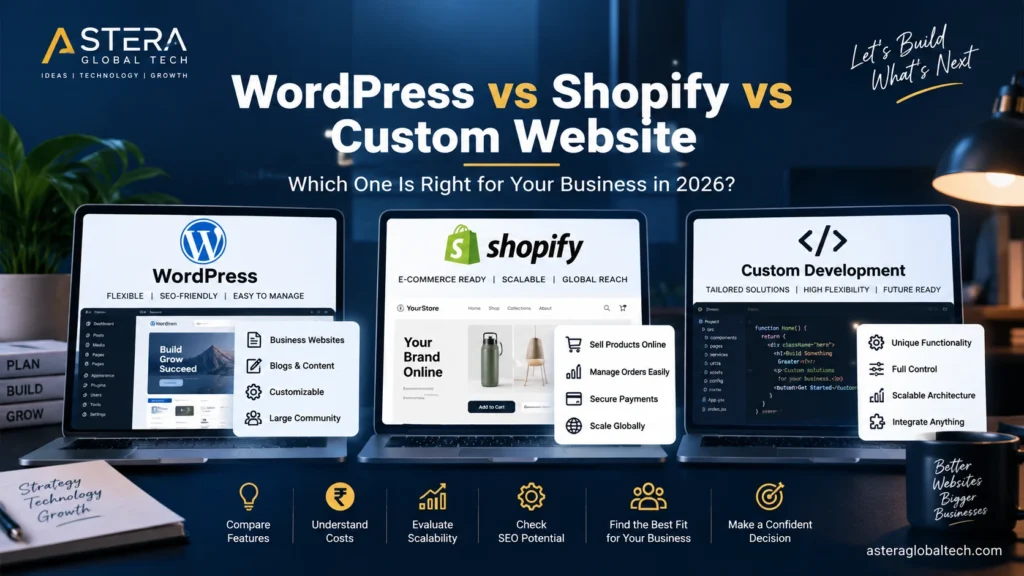
WordPress Development
WordPress is a practical option for many corporate websites, blogs, service businesses and content-focused platforms.
It offers flexible content management, a large ecosystem and opportunities for custom development.
Learn more about our WordPress development services.
Shopify and Shopify Plus Development
Shopify is designed for online commerce, making it suitable for brands that need product management, checkout, payments and eCommerce integrations.
Shopify Plus may be appropriate for businesses with more complex commerce operations and scaling requirements.
Explore our Shopify Plus development services.
Webflow Development
Webflow can be a useful choice for design-led marketing websites that require responsive layouts and visual content management.
See our Webflow development services.
Custom Website Development
Custom development may be preferable when your business needs specialized workflows, dashboards, portals, API integrations or functionality that standard platforms cannot efficiently support.
The best agency should explain the advantages and limitations of each option instead of recommending the same technology for every project.
4. Make Sure SEO Is Considered During Development
A beautiful website has limited business value if potential customers cannot discover it.
Search engine optimization should be considered during planning and development, not treated only as a final checklist.
Important technical and on-page considerations include:
-
Logical page structure and heading hierarchy.
-
Descriptive, readable URLs.
-
Mobile-friendly layouts.
-
Optimized images and efficient loading.
-
Appropriate page titles and meta descriptions.
-
Internal links between related pages.
-
Canonical tags where necessary.
-
XML sitemaps and sensible indexing controls.
-
Structured data when relevant.
These elements do not guarantee rankings, but they help create a strong technical foundation for organic search.
For businesses targeting customers in particular locations, the website should also clearly communicate service areas, relevant expertise and contact information.
What to ask: Which SEO elements are included in the development scope, and which require a separate ongoing SEO service?
5. Prioritize Mobile Experience and Performance
Many customers first discover a business through their smartphones.
A website that looks impressive on a desktop but is difficult to use on mobile can lose valuable enquiries.
Your development partner should test:
-
Navigation and menus on smaller screens.
-
Text readability without excessive zooming.
-
Button and form usability.
-
Image and layout responsiveness.
-
Loading performance.
-
Checkout or enquiry journeys.
-
Common browser and device combinations.
Performance should also be considered from the beginning.
Heavy images, unnecessary scripts, excessive third-party tools and inefficient code can affect loading times.
Ask how the agency measures performance and what optimization is included before launch.
6. Understand the Full Development Cost
Website development pricing varies because different projects require different levels of design, functionality, integration and testing.
A basic business website is not directly comparable to a custom eCommerce platform or a complex application.
When evaluating a quotation, check whether it includes:
-
Discovery and requirement planning.
-
UI/UX design.
-
Frontend and backend development.
-
Mobile responsiveness.
-
CMS configuration.
-
Contact forms and integrations.
-
Basic technical SEO.
-
Testing and quality assurance.
-
Deployment and launch support.
-
Training and documentation.
-
Post-launch maintenance.
Also clarify recurring expenses such as domain renewal, hosting, paid applications, third-party subscriptions and ongoing support.
A lower initial quote is not necessarily the more economical option if essential features or support are excluded.
Tip: Request a written scope of work with deliverables, milestones, payment terms and revision limits.
7. Ask About Website Security
Security should be part of the development process, particularly when a website collects personal information, processes payments or provides administrative access.
Depending on the platform and project, good security practices may include:
-
HTTPS configuration.
-
Appropriate user permissions.
-
Secure handling of credentials.
-
Input validation and output escaping.
-
Regular software and dependency updates.
-
Backup and recovery procedures.
-
Protection of administrative areas.
-
Secure payment gateway integrations.
Security is an ongoing responsibility, so ask who will manage updates, backups and monitoring after launch.
For custom applications, clarify whether security testing and maintenance are included in the contract.
8. Evaluate Communication and Project Management
Even a technically capable team can struggle to deliver a successful project without clear communication.
Before hiring an agency, understand how the project will be managed.
Ask questions such as:
-
Who will be our main point of contact?
-
How often will we receive progress updates?
-
Will we be able to review designs before development?
-
How are feedback and revisions handled?
-
What happens if the scope changes?
-
How will bugs be reported and resolved?
-
What is the approval process before launch?
A structured workflow helps both the client and development team avoid misunderstandings.
Look for an agency that communicates realistically about timelines and identifies dependencies early.
9. Confirm Ownership and Post-Launch Support
Your website is a long-term business asset.
Before signing an agreement, clarify who will own and control important resources after the project is completed.
These may include:
-
Domain registration.
-
Hosting account.
-
Website administration access.
-
Source code and custom-developed assets.
-
Design files, where included in the agreement.
-
Analytics and Search Console accounts.
-
Third-party integrations and subscriptions.
Ownership and licensing arrangements can differ, particularly when paid themes, plugins or external software are involved.
Also ask whether the agency offers post-launch support for bug fixes, updates, backups, performance improvements and future features.
A website should be maintainable and capable of evolving with your business.
10. Choose a Partner Who Understands Business Growth
Website development is not simply about publishing pages online.
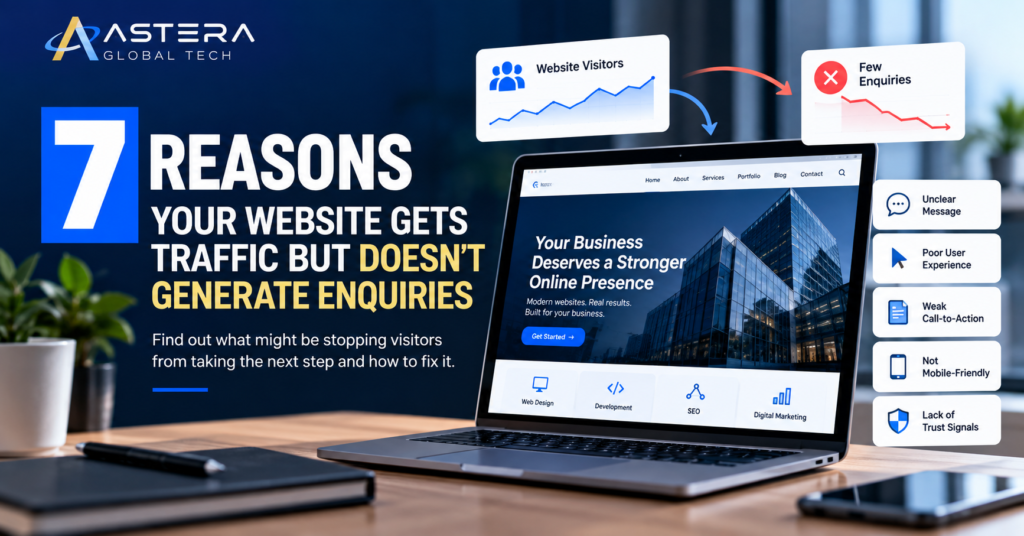
For many businesses, a successful website must help visitors understand the offering, trust the brand and take a meaningful next step.
That next step might be submitting an enquiry, requesting a quotation, booking a consultation or completing a purchase.
A development agency should therefore consider:
-
Clear service and product messaging.
-
Trust-building elements such as authentic testimonials and case studies.
-
Relevant calls to action.
-
Simple enquiry and checkout processes.
-
Analytics and conversion tracking.
-
Opportunities for future SEO and marketing improvements.
The objective is not to add unnecessary features. It is to build a website that supports the way your business operates and grows.
Common Mistakes to Avoid When Hiring a Website Development Company
Businesses sometimes make decisions based on price or visual design alone.
Common mistakes include:
-
Choosing the cheapest quotation without comparing deliverables.
-
Starting development without clearly defined requirements.
-
Ignoring mobile usability and website performance.
-
Assuming SEO is automatically included in every project.
-
Failing to confirm ownership of domain, hosting and website access.
-
Overlooking maintenance and security responsibilities.
-
Approving a website without testing its forms, navigation and conversion journeys.
Taking time to clarify these areas before development can reduce unexpected costs and delays.
Why Consider Astera Global Tech?
At Astera Global Tech, we work with businesses looking to develop, improve and grow their digital presence.
Our capabilities include website development, WordPress, Shopify Plus, Webflow, custom software, AI automation, SEO and digital marketing.
We focus on connecting technology decisions with practical business requirements, from the initial planning stage through design, development and ongoing improvement.
Whether you’re launching your first business website, redesigning an existing platform or planning a more advanced digital solution, the starting point should be a clear understanding of your goals.
Explore our website development services to understand how we can support your project.
Frequently Asked Questions
How do I choose a website development company in India?
Start by defining your business goals, then compare agencies based on relevant portfolios, technical expertise, communication, security practices, project scope and post-launch support. Ask for a detailed proposal rather than choosing solely on price.
Which is better for a business website: WordPress or custom development?
WordPress can be a strong choice for content-focused and service-based websites. Custom development may be better when a business requires specialized functionality, complex integrations or unique application workflows. The right option depends on your requirements.
Should a website development company provide SEO?
A development agency should be able to implement foundational technical SEO elements such as clean URLs, mobile-friendly layouts, appropriate metadata and crawlable page structures. Ongoing keyword research, content creation and link acquisition may be separate services.
How long does website development take?
Timelines depend on the project’s complexity, content readiness, integrations, design approval process and testing requirements. Ask the agency for a milestone-based schedule tailored to your project.
What should be included in a website development quotation?
A clear quotation should describe deliverables, design scope, functionality, integrations, testing, deployment, revision limits, payment milestones, ownership terms and support arrangements.
Can I redesign my existing website without losing SEO rankings?
A redesign can preserve much of an existing site’s search visibility when handled carefully, but rankings cannot be guaranteed. Important considerations include URL mapping, redirects, content preservation, internal links, metadata and post-launch monitoring.
Final Thoughts
Choosing the right website development company in India requires more than comparing prices or browsing attractive designs.
The strongest development partner for your business is one that understands your objectives, recommends suitable technology, communicates clearly and delivers a website that is usable, maintainable and ready to support growth.
Planning a new website or redesign in 2026?
Connect with Astera Global Tech to discuss your requirements and explore a development approach suited to your business.